
Disclaimer: This blog is for general informational and inspirational purposes only, based on publicly available information and personal insights. Images—whether of models, screenshots, or products—are for illustrative purposes only and do not depict actual subjects, scenarios, or views described. We do not intend to offend or conflict with any societal, cultural, religious, or political values.
You’re getting ready to launch a new product. It could be a handcrafted wooden chair, a bouquet of fresh dahlias, or sparkling earrings. The design is flawless. But the photo? Not quite.
There’s a wrinkle in the backdrop, the lighting is uneven, and that shadow behind the leg of the chair? It’s distracting. You wonder — “Can’t some smart AI just fix all this for me?”
Here comes the crossroads of AI and human artistry.
Fast, flawless, and reasonable image editing needs are increasing for online businesses. AI tools help in this need with swift results at an inexpensive price, raising concerns that AI will replace human editors in the future.
Wait a minute before you stop with this concern. AI is powerful, but it’s not always the wisest choice in image editing.
This blog explores the real scenery and unfiltered story of whether AI will replace human photo retouchers or if greater harmony awaits exploration.
Let’s get started.
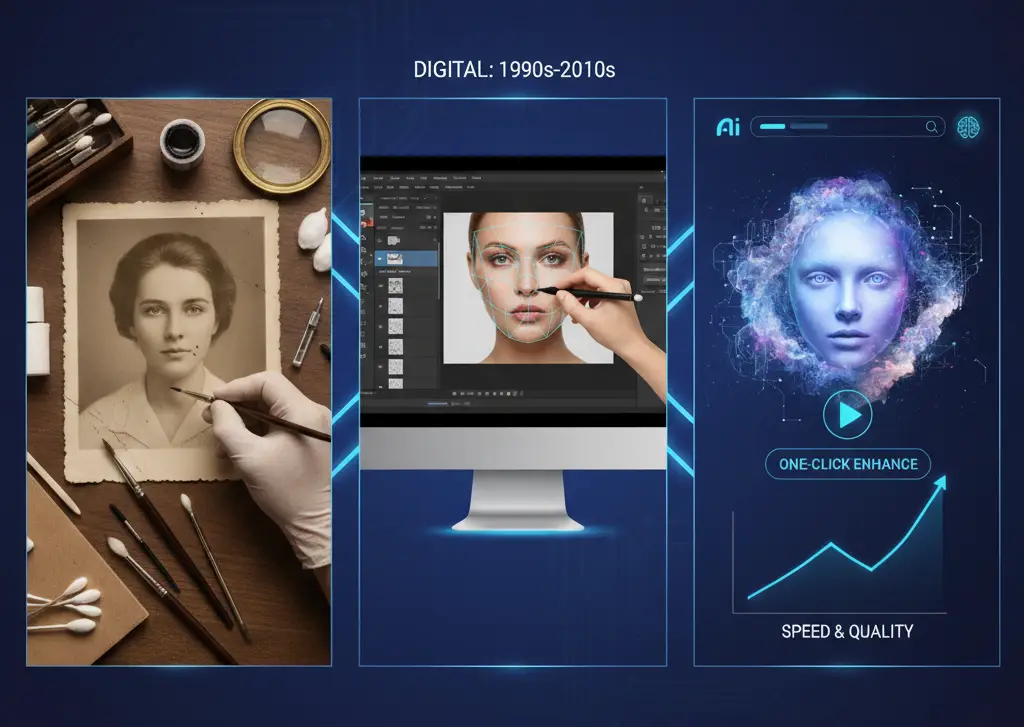
The Evolution of Photo Retouching: Enter AI
 This image is used solely for illustrative purposes. We do not intend to offend or conflict with any societal, cultural, religious, or political values. Image Source: Google AI Studio
Editing a product photo not long ago meant hours of careful, manual work. Every adjustment—removing a background or softening shadows relied on skill, patience, and plenty of time.
But things have changed.
Now, tools can handle what used to take trained professionals hours in seconds. Need the background gone? It’s done with a click. Want smoother skin or richer-looking fabric? Just tap a button.
Here are a few tools many creatives are using to speed things up:
- Adobe Sensei: Spots the subject in your photo automatically and suggests smart adjustments—like magic, but with years of Adobe’s editing expertise behind it.
- Luminar Neo: Brightens up lighting, adjusts colors, and can even swap out a dull sky with something more eye-catching. It’s like having a mood editor built in.
- Canva’s Magic Edit: Perfect for beginners or small business owners—easy touch-ups, quick fixes, and intuitive design tools all in one place.
- Fotor, Pixelcut, and Remove.bg. Great for batch-editing product photos, removing backgrounds, or getting your images ready for your online store in no time.
These tools have become a favorite for online business owners, florists, boutique furniture brands, and even magazine photographers looking for quick touch-ups.
Why? Because:
- It’s fast. What once took 2 hours now takes 2 minutes.
- It’s budget-friendly. Many tools are free or low-cost.
- It’s accessible. You don’t need advanced editing skills to use them.
While AI tools can get you 80% of the way there, they often miss the final 20% — the detail, the nuance, the emotional tone.
We once had a cycle brand submit product photos for white-background e-commerce use. They’d already used an AI background remover. The result? The background was gone… but so were parts of the bicycle chain and the shadow under the tire. Details lost, realism gone.
The lesson? AI can speed up your workflow, but can’t consistently deliver polished, professional perfection that reflects your brand and sells your product.
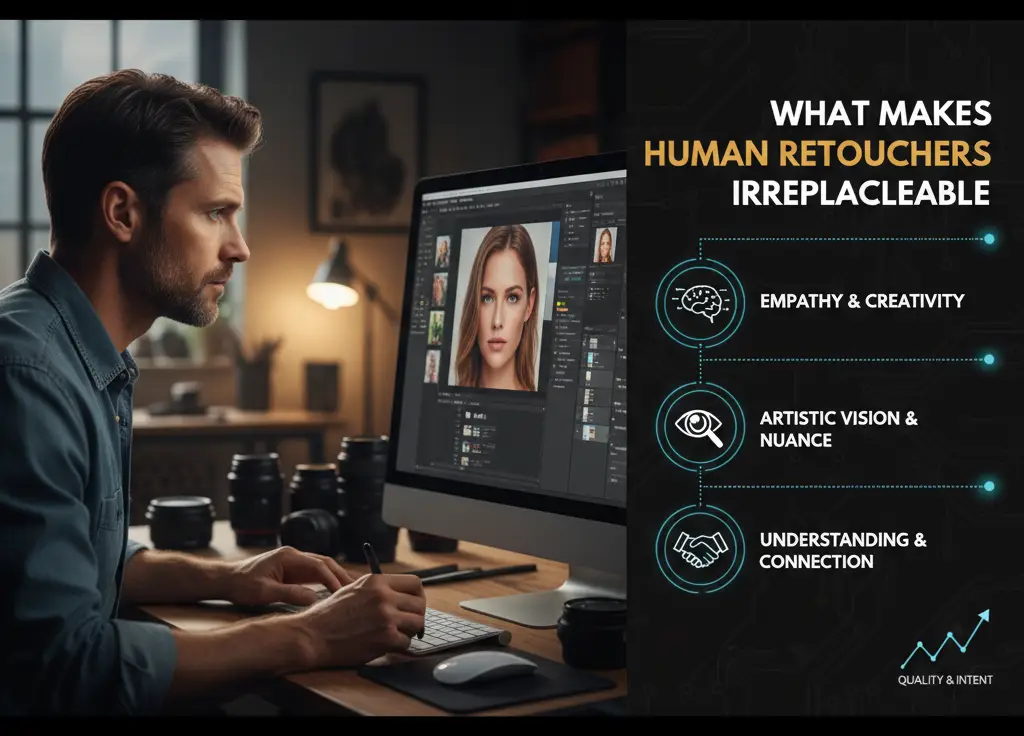
What Makes Human Retouchers Irreplaceable
 This image is used solely for illustrative purposes. We do not intend to offend or conflict with any societal, cultural, religious, or political values. Image Source: Google AI Studio
Let’s take you back to a photo we edited for a boutique fashion brand. The model in the picture wore flowing fabric in sunlight, stitched through branches. It created a fantastic view, but the client asked to keep the natural light with smooth shadows to highlight the dress.
We completed the image as instructed, and the result was stunning. Now, think of editing the same photo using AI. What will happen? It might brighten the whole picture or blur the shadows, resulting in an unrealistic image. That’s where human retouching comes in.
Despite all the noise around AI, skilled human editors still bring something to the table that AI can’t:
Artistic Judgment and Creative Direction: AI knows where a shadow is, but not why it matters. A human retoucher understands light, balance, emotion, and how those elements tell a story. This artistic instinct can’t be replaced in fashion photography or ghost mannequin photo editing.
Attention to Micro-Details: Zoom in close enough, and you’ll see it.
- The imperfect hairline on a model’s portrait
- A tiny fabric pucker on the backrest of a chair
- Slight color inconsistencies across a product batch
AI often misses these things. Or worse, it “corrects” them in the wrong way. Human retouchers notice everything and fix it as they know what to keep or remove.
Contextual Understanding: Human editors know the brand and goals behind an image. Contrarily, AI works only with the data it’s been trained on and doesn’t truly understand the bigger picture.
- As a car parts seller, you may prefer high-contrast edits that bring out metallic details.
- As a cycle business owner, you may want reflections toned down but shadows preserved for realism.
A human retoucher sees not just the image, but the intent behind it. That’s what transforms a picture into a marketing tool.
The Soul of a Good Edit: Great editing doesn’t shout, it whispers. It tells a story without making itself the story. No matter how advanced AI becomes, it doesn’t feel like it. It doesn’t know when to hold back, when to enhance just enough, or when to leave something beautifully imperfect.
That’s the soul of human-led photo retouching services. That’s what you get when you work with real artists, like the team at Cut Out Image.
Should the inner neck of the shirt be visible? Should we keep that crease to maintain realism? These are not binary decisions; they’re creative ones.
Communication and Customization: Let’s be honest — AI doesn’t take feedback. But a human? They’ll ask the right questions:
- Do you want a high-gloss or matte finish for your product shot?
- Should we match the catalog by keeping the natural wood grain or smooth the shadow?
And if something’s off, they’ll fix it — no automated ticket system needed.
With Cut Out Image, communication is part of the process. Whether you’re a studio manager, photographer, or a flower business preparing for Mother’s Day promotions, our editors listen — and deliver.
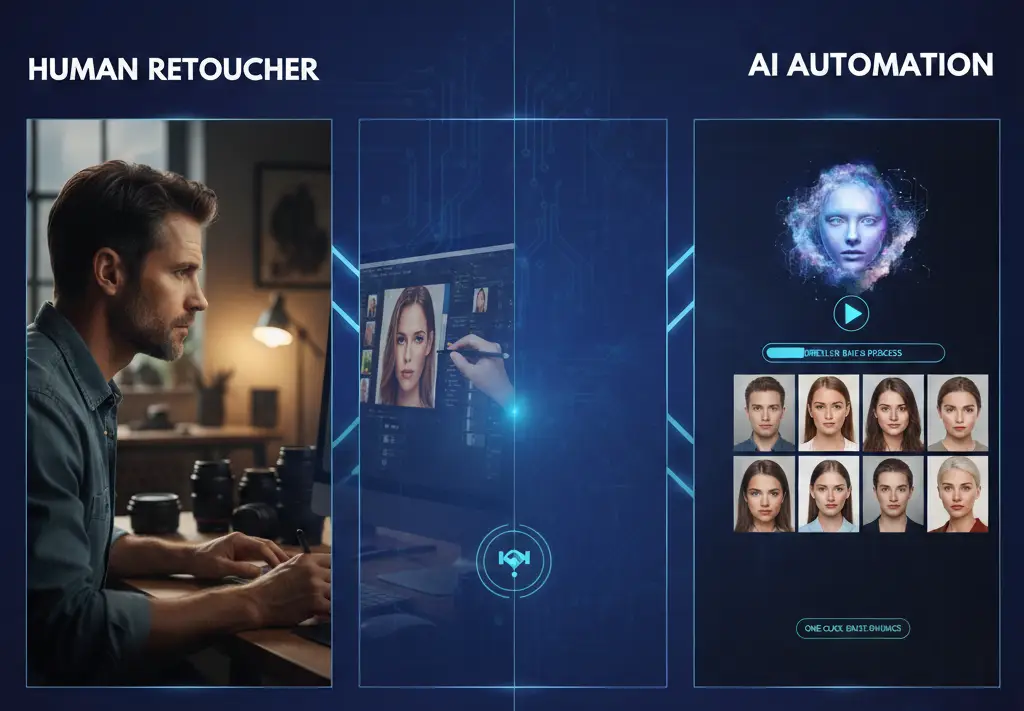
Will AI Replace Photo Retouchers?
 This image is used solely for illustrative purposes. We do not intend to offend or conflict with any societal, cultural, religious, or political values. Image Source: Google AI Studio
AI is now a trendy feature of the digital world. It has reshaped the world, including the photo world. AI tools are getting smarter day by day. Now comes the million-dollar question: “Will AI replace the photo retoucher?”
Here’s the honest answer — AI won’t replace skilled retouchers; instead, it will assist them. Let’s break down why, point by point:
A) Head-to-Head Comparison: AI vs Human Retouching
AI and human editors both have their Upsides and drawbacks in photo editing. Learning when to use which can save you time, money, and help your images truly shine.
- Speed: If you have many images to upload and need a quick edit, AI tools can help you do it fast. But speed conflicts with quality. A human editor gives the highest quality for the best final look, like a homepage photo or lifestyle shot.
- Consistency: Automated tools work well for repeated tasks like cropping and color fixes. It is helpful for an online business with basic editing needs. But human editors can adjust images to match your brand’s style.
- Creativity: Human retouchers are more inventive than AI. They understand instructions and pay attention to what clients really want. They also employ their artistic skills to ensure that visuals fit the brand. In contrast, AI follows set rules and needs precise prompts to work. AI cannot create moods or feelings like a human can.
- Error Handling: Image editing combines technical and creative processes. Human editors can identify the mistakes and fix them. They can also respond to clients’ feedback for any change or error, but AI lacks these attributes.
- Contextual Awareness: People understand the purpose of editing a photo and know how to enhance it. In contrast, AI follows its programming and doesn’t grasp the image’s intent. For instance, AI can’t tell if a shadow is good or bad, but a human editor can. AI may even make changes that aren’t helpful at times.
- Image File Formats: Choosing the correct image file format for editing. Some formats load quickly for websites, while others are better for print or require design transparency. A skilled editor knows how to prepare files for optimal results in any situation, which may not be possible with other tools.
B) Where AI Shines
AI editing tools are now a solid part of the modern creative process. Here’s where they stand out:
- Speed and Efficiency: If you need to prep hundreds or thousands of product shots for an online store — say, a cycle business launching a new model or a furniture retailer updating their catalog — AI can: Quickly remove backgrounds, Auto-correct lighting, and Resize and crop for different platforms. This fast turnaround sets the bar high, which keeps your marketing pipeline running smoothly.
- Reasonable for Basic: Different AI tools are free or low-costly available in the market, which small businesses and startups with limited budgets can utilize to enhance their images with basic editing needs.
- Bulk Consistency: Having all images look consistent for online stores or websites is essential. It can be challenging to edit many photos at once, but AI can help maintain things the same for simple tasks.
- User-Friendly: AI tools are simple to use. People who don’t know how to design or use Photoshop can use it to edit images automatically.
C) Where the Skilled Human Eye Wins
- When it comes to editing photos, both humans and AI have their powers and flaws. The key is knowing which works best for your project to save time and money.
- Storytelling Edits: A photo isn’t just pixels—it’s emotion. A bouquet can feel romantic, and a cozy sofa can be inviting. Skilled editors can create the mood, adjusting the shadow or refining the color and highlighting tiny details like fabric texture or embroidery.
- Precision Work: Have you ever seen a photo of a worn shirt or dress without a model? That’s called ghost mannequin editing. It’s tricky—it takes careful masking, perfect shadows, and clean edges. That’s where a human touch makes a difference.
- Listening to Real Feedback: A client might say, “Can you make this chair feel warmer?” A human retoucher knows what that means without step-by-step instruction. They’ll adjust tone, lighting, maybe even color balance—whatever it takes to match the vision. They listen, interpret, and adjust until the image matches the client’s mind. While you can give similar feedback to an AI tool, it’s not the same as how a person hears you and responds with care.
- Keeping Your Brand Consistent: When you sell online, your images speak for you; they must say the same thing every time. Consistency is key, whether your brand is warm and cozy or sleek and modern. An expert editor works on every detail to ensure consistency with the brand.
- Choosing the Right File Format: A photo for Instagram differs from one for a printed catalog. Online images must load quickly, while print images must be sharp and clear. A good editor knows the correct format for each and prepares the photo to look its best everywhere.
D) The Future: Partnering with AI or Being Replaced?
The change in how we edit photos isn’t going away anytime soon. It’s here to stay — and it’s evolving fast. But instead of asking if AI will replace photo retouchers, maybe we should ask, How will AI assist photo retouchers to work smarter?
AI isn’t a trend; it’s here to stay and evolving fast. It’s not about replacing retouchers; rather, it will assist them in working faster. Why say these? Well, let me explain-
- AI is Editing Partner: If photo editing is like flying a plane, human editors are the pilots doing the central part of decision-making. AI tools are the co-pilots assisting in handling repetitive tasks like background removal.
- Human Eye Catches the Difference: AI works based on trained data, but humans work based on experience and brainstorm in exceptional cases to make creative decisions. Human editors interpret the story behind the photo and understand the image’s emotional impact to edit with nuance and artistry that AI can’t.
- Editors Evolve Through Feedback: Retouching is a two-way street. On one hand, a real person might say, “Keep those natural shadows, they look great.” Editors on the other side will adjust accordingly and even ask follow-up questions. You can’t have this kind of two-way communication with an AI tool.
- Expertise matters: Complex edits like the ghost mannequin require expert involvement, as the final result should depict a dress worn without a model. AI cannot complete such a complex edit without the expertise of a human editor.
- Retouchers Evolving: Human editors are evolving into the creative directors of the editing process by blending artistic skill with AI assistance. They are using AI for efficiency while applying skill for the final touches. This combination improves quality and speeds up delivery, benefiting editors and clients.
- The Power’s in the Mix: People + Tools together work best for business owners. AI can speed up the workflow, and human retouchers ensure every image aligns with brand standards. The best way to get great images is to combine AI speed with human skill.
At Cut Out Image, our expert retouchers work carefully to make your photos look their best.
Conclusion
So, Will AI Replace Photo Retouchers? Let’s be honest—probably not anytime soon.
AI excels at handling repetitive tasks, saving time, and, in many cases, delivering satisfactory results. But humans still lead the way regarding the things that matter—creative nuance, emotional storytelling, and the little details that make an image unforgettable.
At Cut Out Image, we employ highly skilled human editors to ensure every image receives that essential final polish. We can make it happen whether you need ghost mannequin editing, furniture photo retouching, or images prepared for web, print, or social media.
Your photos aren’t just content—they’re your first impression and part of your brand story. They need more than automation. They need care, thought, and creativity.
👉Get a Free Trial or check out our Services to see the difference.


![How To Create a Gradient in Photoshop [ Expert Opinion ]](https://www.cutoutimage.com/wp-content/uploads/2022/10/How-To-Create-a-Gradient-in-Photoshop.webp)

